Publications
* denotes equal contribution and joint lead authorship.
2025
-
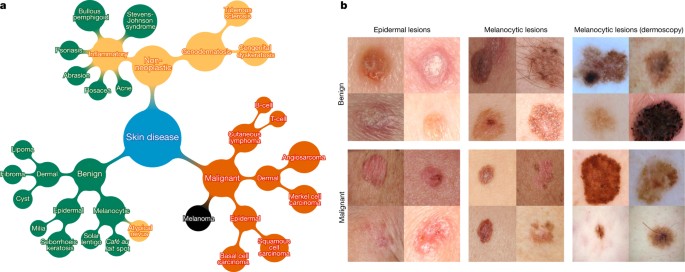 Enhancing skin lesion diagnosis with data augmentation techniques: a review of the state-of-the-artAniket Patil, Anjula Mehto, and Saif NalbandMultimedia Tools and Applications, 2025
Even if more and more high-quality public datasets are available, one of the biggest problems with deep learning for skin lesion diagnosis is still the paucity of training samples. On several computer vision tasks, deep convolutional neural networks have displayed impressive performance. While the models developed by these algorithms often outperform more conventional machine learning techniques, they require more extensive datasets to be accessible for training. Data augmentation has emerged as a common technique for addressing this problem, especially in domains where massive datasets are not frequently accessed, which is frequently the case when working with medical imaging. The goal of data augmentation is to create more data used to train the model, and it has been found to enhance performance when verified on a different, unexplored dataset. This survey devotes much time to using augmentation techniques based on Basic Data Augmentation algorithms, GANs, and VAE. Data Augmentation, a data-space solution to the issue of limited data, is the main topic of this survey. This study seeks to provide insight into these methodologies and confidence in the validity of the models generated as artificial intelligence models trained with augmented data find their way into the clinic.
@article{patil2025enhancing,
  title = {Enhancing skin lesion diagnosis with data augmentation techniques: a review of the state-of-the-art},
  author = {Patil, Aniket and Mehto, Anjula and Nalband, Saif},
  journal = {Multimedia Tools and Applications},
  volume = {84},
  number = {22},
  pages = {25325--25364},
  year = {2025},
  publisher = {Springer},
  paper = {https://doi.org/10.1007/s11042-024-20145-7}
}
2023
-
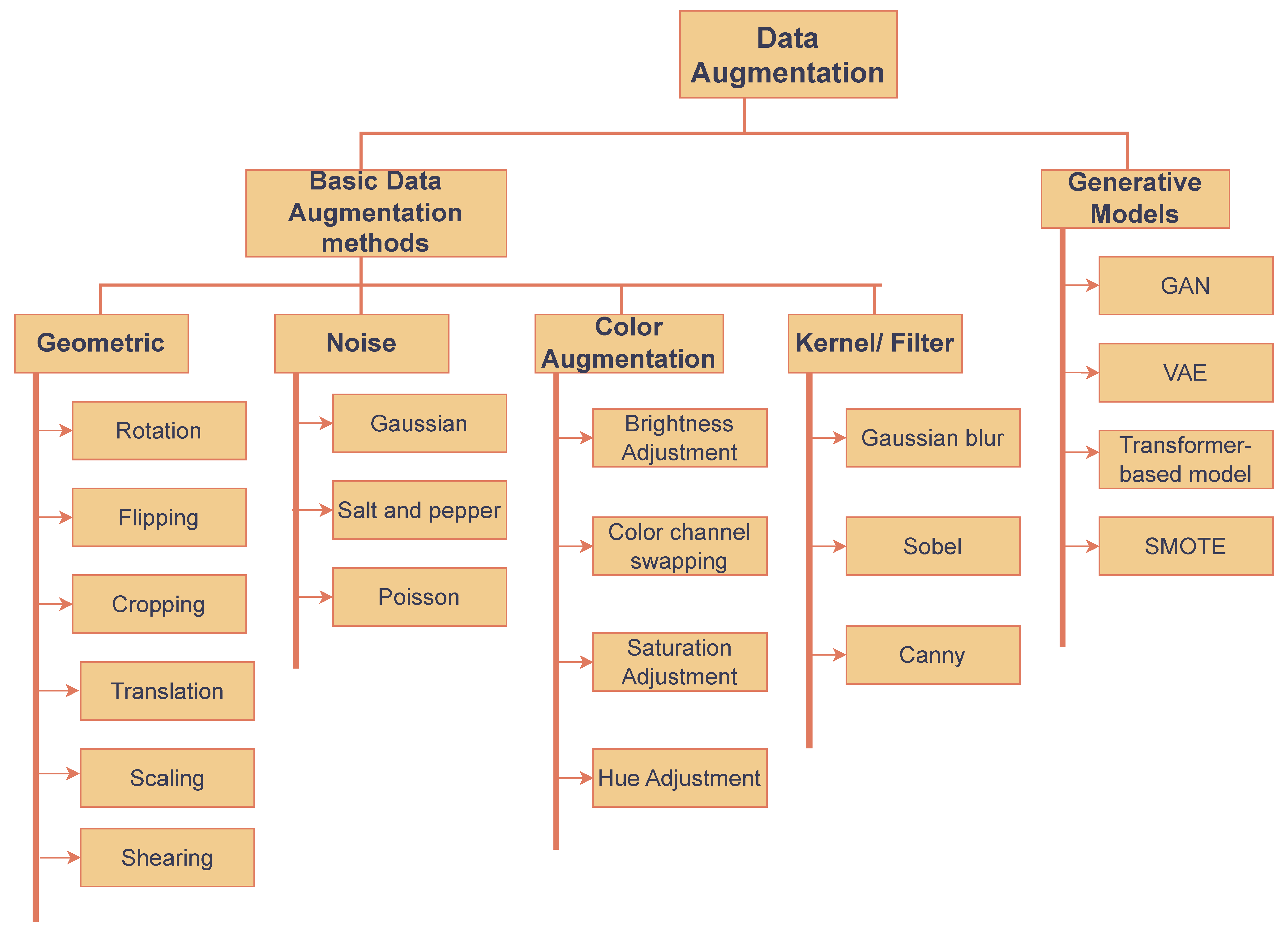 Skin Cancer Image Augmentation Techniques Using AI: A Survey of the State-of-the-ArtAniket Y Patil, Yashwant S Ingle, Nuzhat Faiz Shaikh, and 2 more authorsIn International Conference on ICT for Sustainable Development, 2023
Even if more and more high-quality public datasets are available, one of the biggest problems with deep learning for skin lesion diagnosis is the scarcity of training samples. Deep Convolutional Neural Networks (CNNs) have exhibited remarkable performance across multiple Computer Vision tasks. Despite their tendency to surpass conventional machine learning methods, the models produced by these algorithms require larger datasets to be accessible during training. An increasingly popular method to deal with this problem is data augmentation, especially in domains like medical imaging where big datasets are hard to come by. Experiments on independent, unknown datasets have demonstrated improved performance using data augmentation, which creates more data to train the model. This survey devotes a lot of time to using augmentation techniques based on basic data augmentation algorithms and the pros and cons of Test Time Augmentation (TTA), Generative Adversarial Networks (GANs), Variational Auto-Encoders (VAEs), and Synthetic Minority Oversampling Techniques (SMOTE). The main focus of this survey is data augmentation, which addresses the problem of limited data by providing a solution within the data space. When these approaches are incorporated into clinical practice, our research attempts to clarify them and increase trust in the reliability of AI models created from augmented data.
@inproceedings{patil2023skin,
  title = {Skin Cancer Image Augmentation Techniques Using AI: A Survey of the State-of-the-Art},
  author = {Patil, Aniket Y and Ingle, Yashwant S and Shaikh, Nuzhat Faiz and Mahalle, Parikshit and Barot, Janki},
  booktitle = {International Conference on ICT for Sustainable Development},
  pages = {569--579},
  year = {2023},
  organization = {Springer},
  paper = {https://doi.org/10.1007/978-981-99-4932-8_52}
}